
New job, new team, new environment – and a head full of question marks. Who doesn’t remember that moment on their very first day at work, wondering: Where am I supposed to go now? or Wait... what were everyone’s names again?
It’s often in those first few hours that the tone is set – for confidence and motivation, or for hesitation and withdrawal. And while a warm welcome matters, what really makes the difference is feeling oriented, included, and part of the team from the very beginning.

Why orientation is about more than just a map
Sure, having a map helps you find the right room or the person in charge. But what truly sticks with people is the feeling of being welcomed, understood, and part of something bigger. A good introduction does more than just deliver information – it provides context and meaning. It helps answer the bigger questions: What’s happening here? Why does it matter? And how can I contribute?
The “First-Day Effect”: what research tells us
Studies show that the first few hours and days play a critical role in shaping how confident, motivated, and connected new team members feel. In social psychology, this is often referred to as the First-Day Effect — a phenomenon that highlights how early impressions set the tone for future engagement.
Some of the most influential factors include:
Emotional impressions: Feelings of excitement, overwhelm, or uncertainty leave a lasting mark.
Social experiences: Do I feel seen? Do I connect with others?
Autonomy: Can I find my way independently, or am I constantly relying on others?
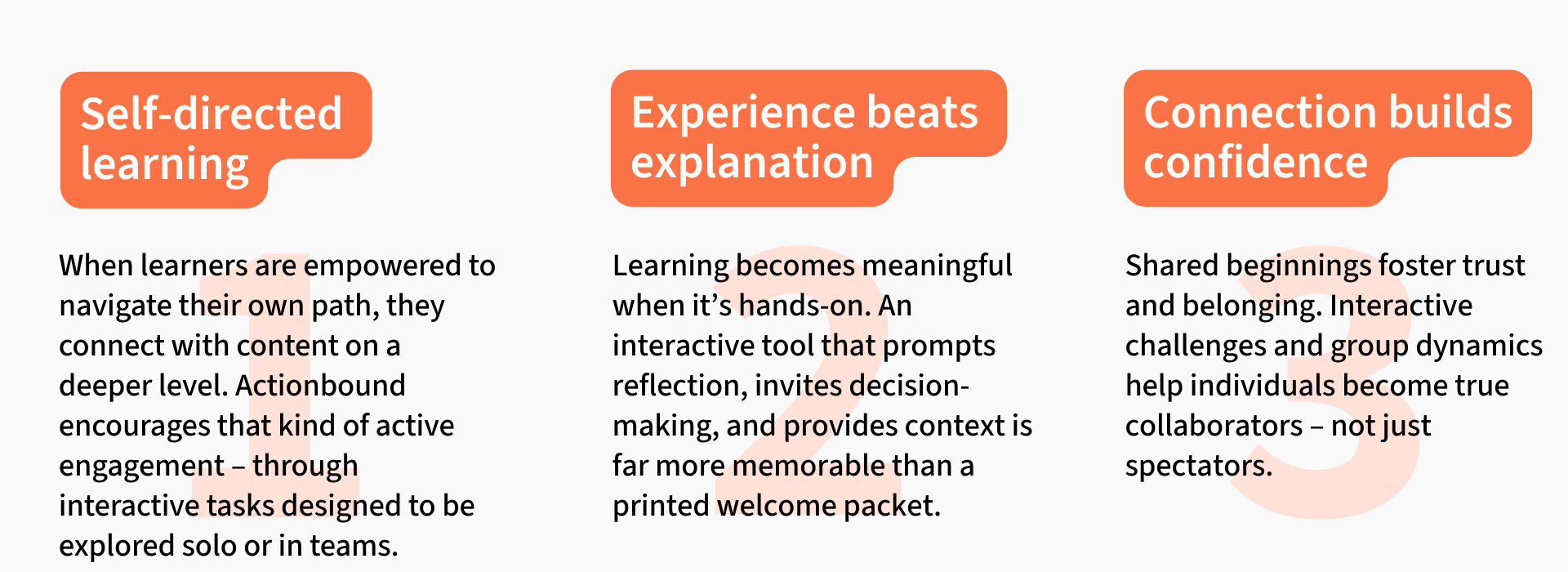
One key takeaway from learning research: the more actively people are involved in their onboarding, the more meaningful and motivating the experience becomes.
From information to identification
A great onboarding experience doesn’t just tell you where things are – it shows you why they matter. Instead of dry instructions or PDF handouts, new employees explore values, goals, and company culture as part of a personal learning journey.
For example: Rather than listing core values in a slide deck, new team members discover them playfully – through mini-quests, QR codes, or location-based tasks. A quote on the team room wall might represent one of the company values – and only those who find it can unlock the next challenge.
Three essentials for a smooth start
Rethinking orientation
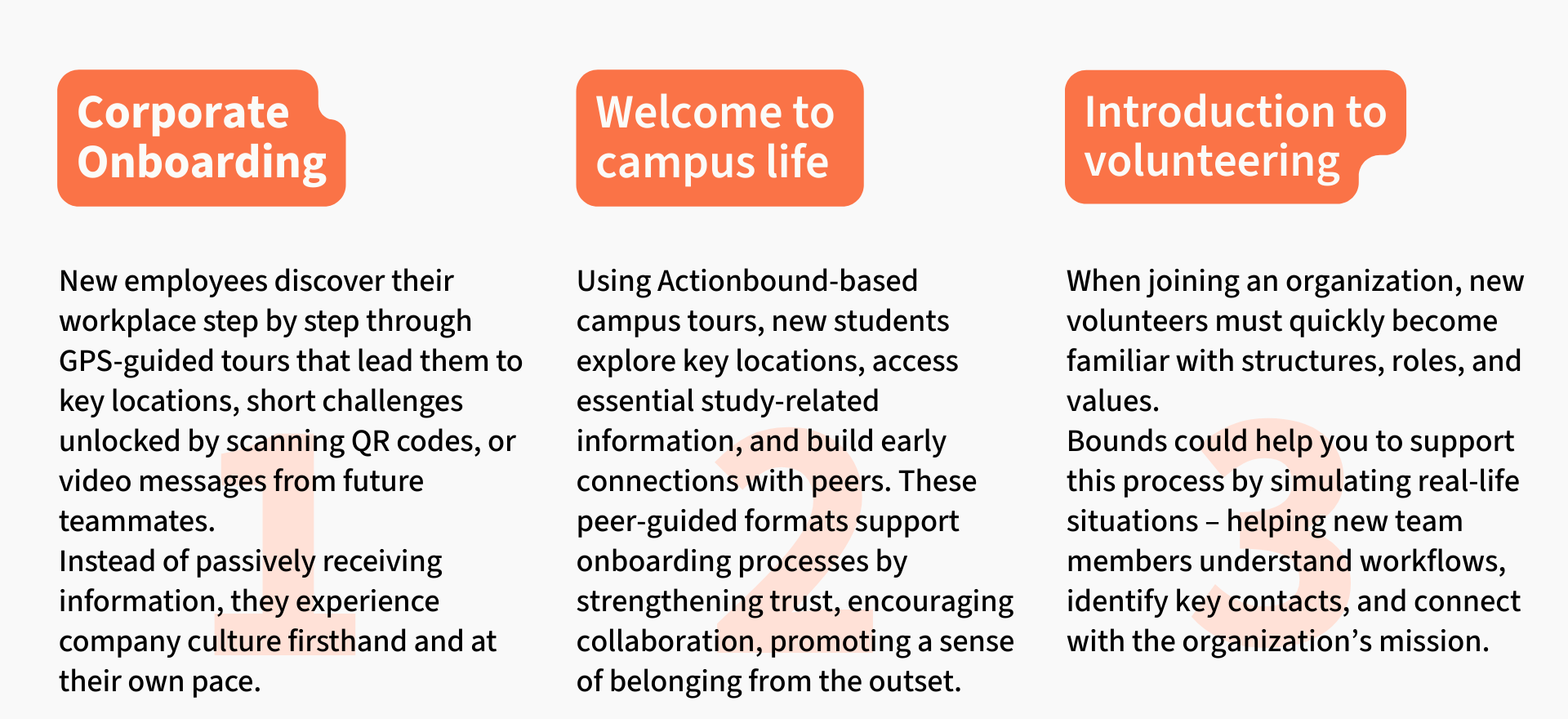
A successful start doesn’t look the same for everyone and it takes more than just information. Actionbound offers a flexible way to shape onboarding and orientation experiences with a didactic approach: as a guided learning journey or an open-ended exploration, for individuals or groups. Depending on the context, content can be structured around locations or themes. Digital tasks, multimedia elements, and reflection prompts help turn passive information into active engagement – at the learner’s own pace.
Take a look at three practical examples in action:
Want to see what that looks like in action?
Take a look at our sample Bound and see how interactive first-day experiences can come to life.
Let’s talk about your next Bound
If you’re ready to shape better beginnings for your team, organization, or project, we’d love to support you. Just reach out to us at sales@actionbound.com. We’re happy to help!